
No pool edge, no lane ropes, no turn every 25 meters: open-water swimming is for many the most beautiful form of swimming and at the same time a real challenge. Cool water, waves, limited visibility and the lack of orientation require different skills than training in the indoor pool. We show you what to pay attention to in terms of safety, technique and in triathlon.
Key takeaways
-
Never swim alone
and, if possible, at supervised swimming areas.
-
Enter the water slowly,
to avoid cold shock.
-
Stay visible:
Bright swim cap and swim buoy.
-
Practice orientation:
Regularly lift your head and align it at fixed points.
-
Knowing your own limits:
Better to swim parallel to the shore than far out.
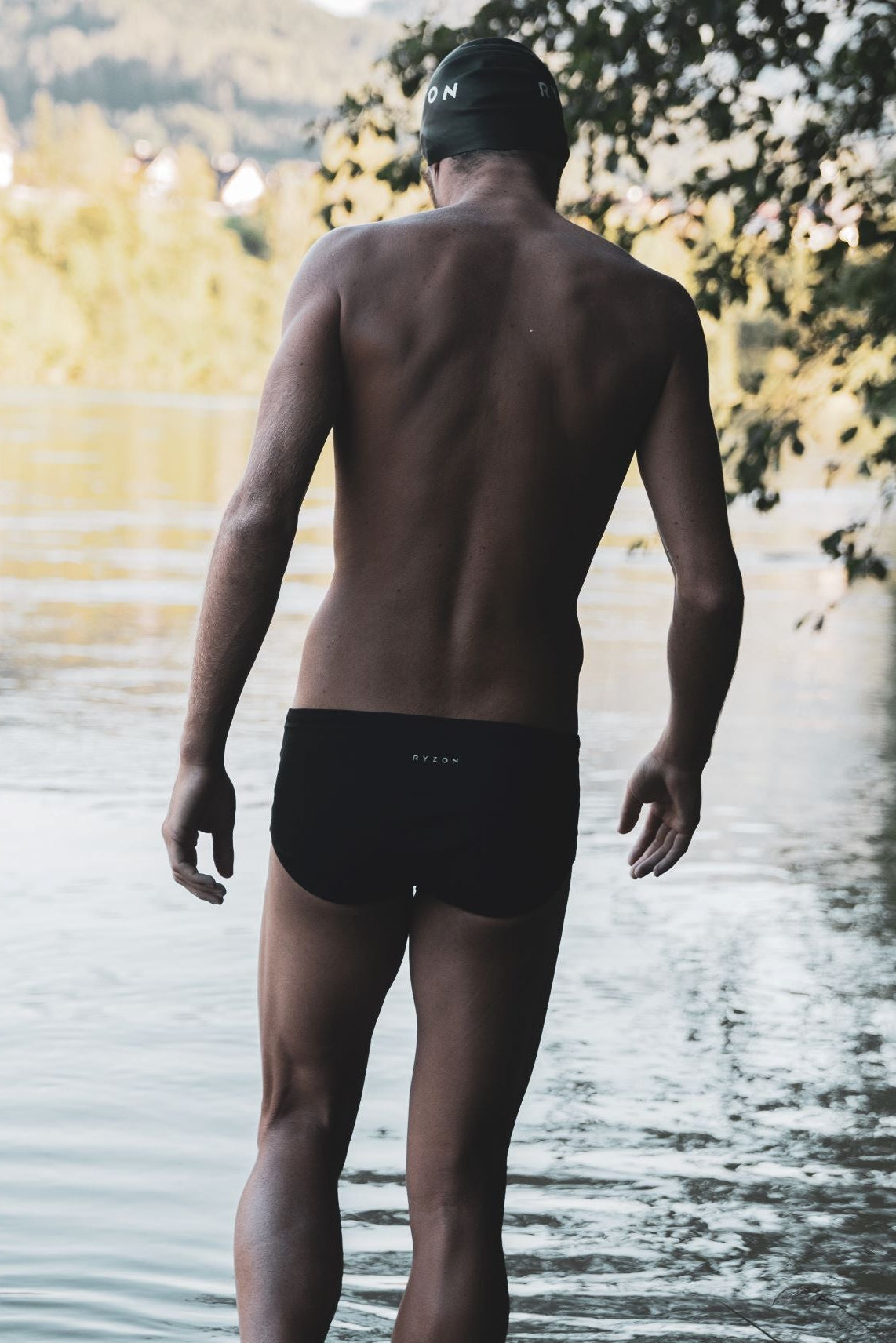
Safety first
Most drowning accidents occur in unpatrolled lakes and rivers. Even well-trained swimmers can suddenly run into trouble in open water, for example due to cramps, cold or exhaustion.
Never swim alone: Whenever possible, swim in open water with company, ideally with someone in a boat or on a SUP next to you. At least tell someone where and for how long you are swimming.
Use patrolled swimming areas: Where lifeguards are on site, you will get help quickly in an emergency.
Swim parallel to the shore: This keeps the shore within easy reach at all times, and you can get out whenever you want.
Avoid rivers: Currents, whirlpools, obstacles and boat traffic make rivers particularly dangerous. Lakes are the better choice for open water training.
Know the waters: Find out about boat traffic, water quality and possible hazards beforehand. Never jump into unknown or murky waters.
Pay attention to the weather: Get out of the water immediately during a thunderstorm. Strong wind and waves also increase the risk.
Fit and sober: Only swim when you feel healthy, never under the influence of alcohol and neither on a full nor an empty stomach.
Avoid cold shock
If you jump into cool water while overheated, you risk cold shock. The body reacts with an uncontrolled breathing reflex, an increased heart rate and blood pressure. In the worst case, this can be life-threatening.
How to protect yourself:
- Cool down before swimming and enter the water slowly.
- Wet your arms, neck and face before you start swimming.
- Give your body the first few minutes to get used to the temperature and breathe calmly.
- Leave the water as soon as you start to shiver.
A wetsuit will keep you significantly warmer in cool water for much longer. A neoprene hood and earplugs can also help.
Stay visible
On the water, you can easily be overlooked by boats, surfers or SUP paddlers. A neon-colored swim cap and an inflatable swim buoy significantly increase your visibility. The buoy also provides a place to hold on for a short break. But it is important: A swim buoy is not a life jacket and does not replace careful selection of the waters. What other equipment you need can be found in the manual What swimming equipment do I need?
Technology in the open water
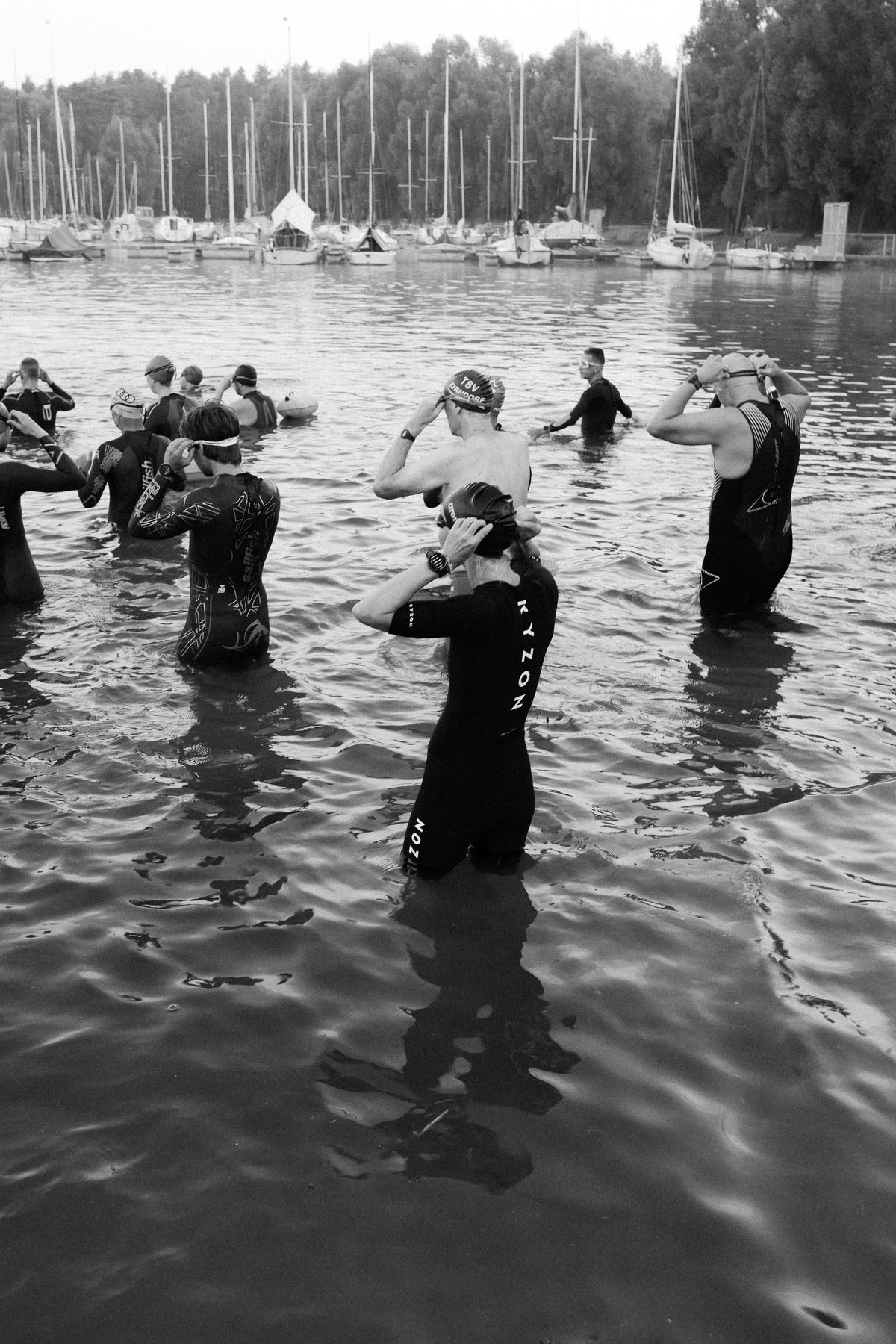
Open Water Swimming in Triathlon
Open water swimming in triathlon comes with additional challenges.
Mass start: At the start, many athletes swim off at the same time, it gets crowded, and contact is normal. If you are unsure, start at the edge or slightly behind the main pack.
Drafting: Swimming directly behind or slightly to the side of others saves energy. Make sure the person in front of you is swimming in the right direction.
Navigating buoys: It often gets crowded at turning buoys. Plan your path in advance and don't let yourself get pushed into a corner.
Wetsuit: Whether a wetsuit is allowed or required depends on the water temperature and is decided by the event organizer. Train in a wetsuit beforehand so that you get used to the feeling.
What do I wear underneath? Under the wetsuit, you wear your triathlon suit. It stays with you from the swim to the finish line without changing and dries quickly on the bike. Triathlete Nick Staggenborg wore the Verge Triathlon Graphene Suit with sleeves under the wetsuit and was able to "swim great" with it.
Practice exiting: After the swim, you go directly into the transition zone. You can read how to optimally prepare for the transition in the guide Setting up your triathlon transition zone correctly.
Ease into it
If you have only swum in an indoor pool so far, start with short sessions near the shore and gradually increase your distance. Swim in groups or with a club that offers open water training. This way, you get used to the cold, orientation, and open water before it gets serious in competition.
FAQ
-
Never swim alone, and whenever possible, swim at supervised beaches and parallel to the shore. Enter the water slowly to avoid cold water shock, and make yourself visible with a neon swim cap and tow float.
-
Cool down before swimming, enter the water slowly, and wet your arms, neck, and face. Give your body time to adjust during the first few minutes, and breathe calmly.
-
Regularly lift your head briefly and aim at a fixed point on land or a buoy. This technique is called sighting and can be easily combined with breathing.
-
Yes, it makes you visible and provides buoyancy for a short break. However, it is not a life jacket and is no substitute for choosing the water carefully.
-
Usually a triathlon suit. It is designed for all three disciplines, so you don't have to change after swimming.